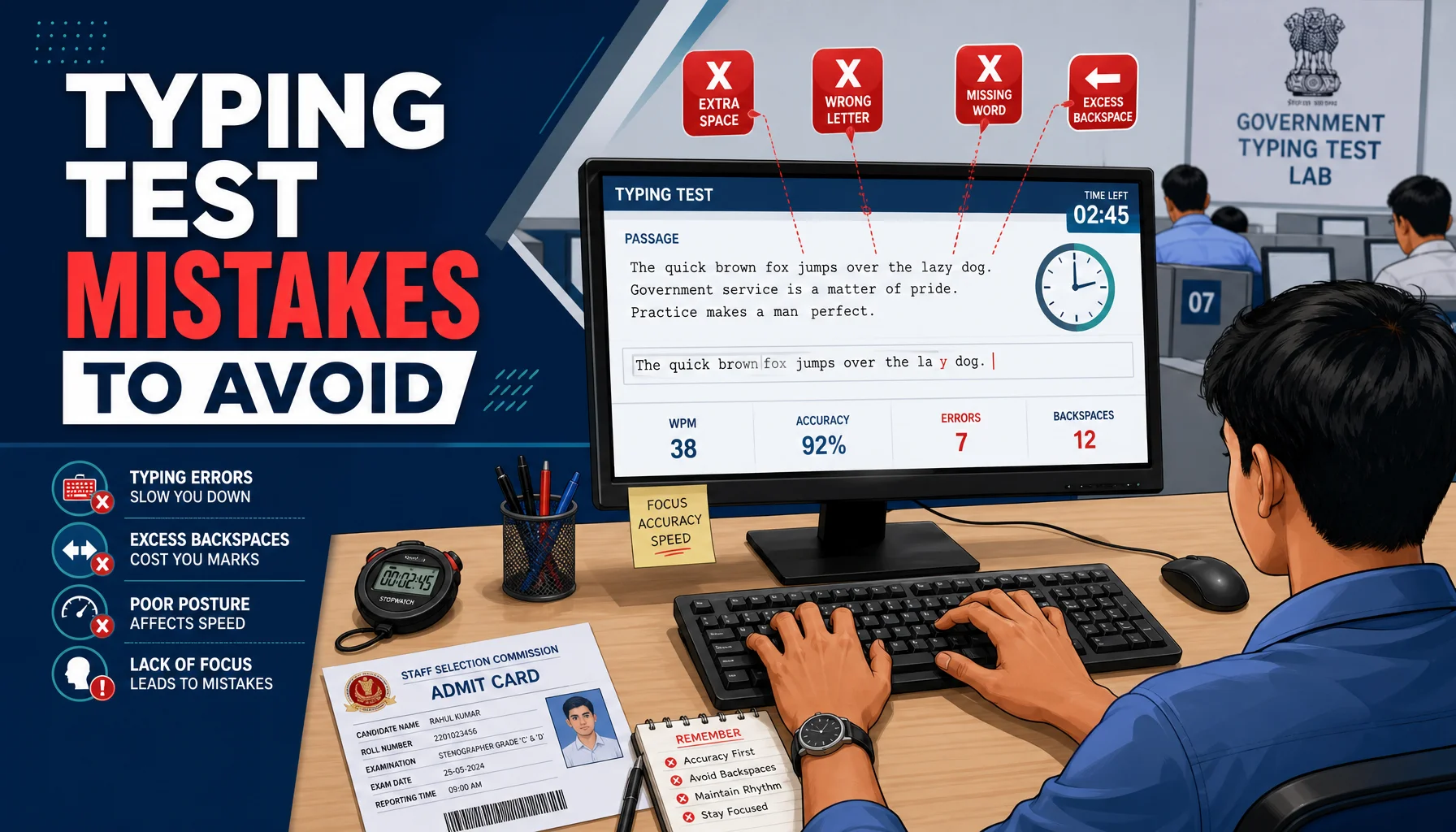
The SSC and RRB typing tests are often the final hurdle between candidates and their dream government jobs. After clearing rigorous written exams, many aspirants stumble at this seemingly simple stage—not because they can’t type, but because they make avoidable mistakes under pressure. The typing test is a qualifying exam, meaning even a single careless error can lead to disqualification. In this article, we’ll break down the most common mistakes that fail candidates and provide actionable strategies to help you pass with confidence.Delhi Teacher Vacancy
Understanding the SSC RRB Typing Test
Before diving into the mistakes, it’s important to understand what the test demands. Typically, candidates are given a passage to type within a fixed time limit (usually 10 minutes). The required speed is around 35 words per minute (WPM) in English or 30 WPM in Hindi. What most candidates forget is that speed alone doesn’t guarantee success—accuracy and adherence to formatting rules matter just as much.
Mistake #1: Rushing Through the Passage
The single biggest reason candidates fail is the temptation to type too fast. When nerves kick in, aspirants often believe that maximum speed equals a guaranteed pass. The reality is quite different.
Rushing leads to a cascade of problems—more typos, skipped words, and inconsistent rhythm. When you type faster than your comfortable pace, your error rate climbs sharply, and in a test that penalizes mistakes, this can be fatal.Government Jobs
How to Avoid It
- Type at a steady, controlled pace rather than sprinting from the start.
- Practice maintaining a consistent rhythm using a metronome or steady beat.
- Remember that finishing early with errors is worse than finishing on time with accuracy.
- Aim for a speed slightly above the required minimum—not your absolute maximum.
Mistake #2: Ignoring Accuracy
Many candidates focus obsessively on WPM during practice while neglecting accuracy. This is a critical error because most typing tests calculate your net speed, which factors in your mistakes. A high gross speed with numerous errors can result in a net speed below the qualifying threshold.
For example, typing 45 WPM with 15% errors may leave you with a net score far lower than someone typing 38 WPM with near-perfect accuracy. The examiner isn’t impressed by speed—they want clean, precise output.
How to Avoid It
- Train for at least 95% accuracy before pushing for higher speeds.
- Slow down whenever your error count starts rising during practice.
- Learn to type without looking at the keyboard (touch typing) to reduce mistakes.
- Focus on typing each word correctly the first time instead of relying on corrections.
Mistake #3: Font and Keyboard Layout Confusion
This is a particularly dangerous mistake for Hindi typing candidates. The exam may require specific fonts like Kruti Dev or Mangal (Unicode), each with a completely different keyboard mapping. Candidates who practice on one layout but face another in the actual exam often find themselves lost and unable to type even simple words.sarkari result
Similarly, English typing candidates sometimes struggle with unfamiliar keyboard layouts or key placements on the exam-provided systems.
How to Avoid It
- Confirm the exact font and layout mentioned in your official exam notification.
- Practice extensively on the specific layout (Kruti Dev or Mangal/Inscript) required.
- Familiarize yourself with special character placements, matras, and conjuncts in Hindi.
- If possible, practice on a QWERTY keyboard similar to the one used at exam centers.
Mistake #4: Neglecting Formatting and Symbols
The passage you type must match the original, including punctuation, capitalization, spacing, and special characters. Candidates frequently lose marks by ignoring commas, full stops, or the proper use of uppercase letters. Extra or missing spaces between words are also counted as errors.
How to Avoid It
- Pay close attention to punctuation marks as you type—don’t skip them.
- Replicate the exact spacing and paragraph structure of the given passage.
- Practice typing passages with numbers, symbols, and mixed content.
Mistake #5: Poor Exam-Day Preparation
Even well-prepared candidates can fail due to last-minute panic, unfamiliarity with the exam interface, or physical fatigue. Sitting posture, hand positioning, and mental composure all play a role in performance.
How to Avoid It
- Take multiple mock tests in a timed, exam-like environment.
- Arrive early to settle your nerves and get comfortable with the workstation.
- Maintain proper posture and keep your wrists relaxed to avoid cramps.
- Read the on-screen instructions carefully before starting.
Mistake #6: Not Reviewing the Backspace Habit
Some candidates constantly hit the backspace to correct minor errors, which drastically slows them down. Others avoid corrections entirely and leave critical mistakes intact. Both extremes hurt your score.
How to Avoid It
- Correct significant errors but avoid obsessing over every minor typo mid-flow.
- Develop a balance between speed and self-correction through practice.
- Understand the scoring rules—know whether corrections help or hurt your net score.
Building a Winning Practice Routine
Consistent, focused practice is the key to overcoming all these mistakes. Here’s a simple routine to follow:
- Daily practice: Dedicate 30–45 minutes to typing every day.
- Track progress: Record your WPM and accuracy to identify weak areas.
- Simulate the exam: Use official sample passages and time yourself strictly.
- Analyze errors: Review which keys or words you commonly get wrong and target them.
Conclusion
Passing the SSC RRB typing test is well within reach if you avoid these common pitfalls. The winning formula is simple: prioritize accuracy over raw speed, master the required font and keyboard layout, respect formatting rules, and prepare mentally for exam day. Remember, this is a qualifying test—steady, error-free typing will always beat frantic, mistake-ridden speed. With disciplined practice and awareness of these mistakes, you can clear this final hurdle and move one step closer to securing your government job.

About the Author
ramyaji
A content writer with two years of experience in the government recruitment domain. He simplifies official notifications and exam updates for SSC, UPSC, Banking, Railways, and State PSCs, helping aspirants stay informed at every stage of their preparation.