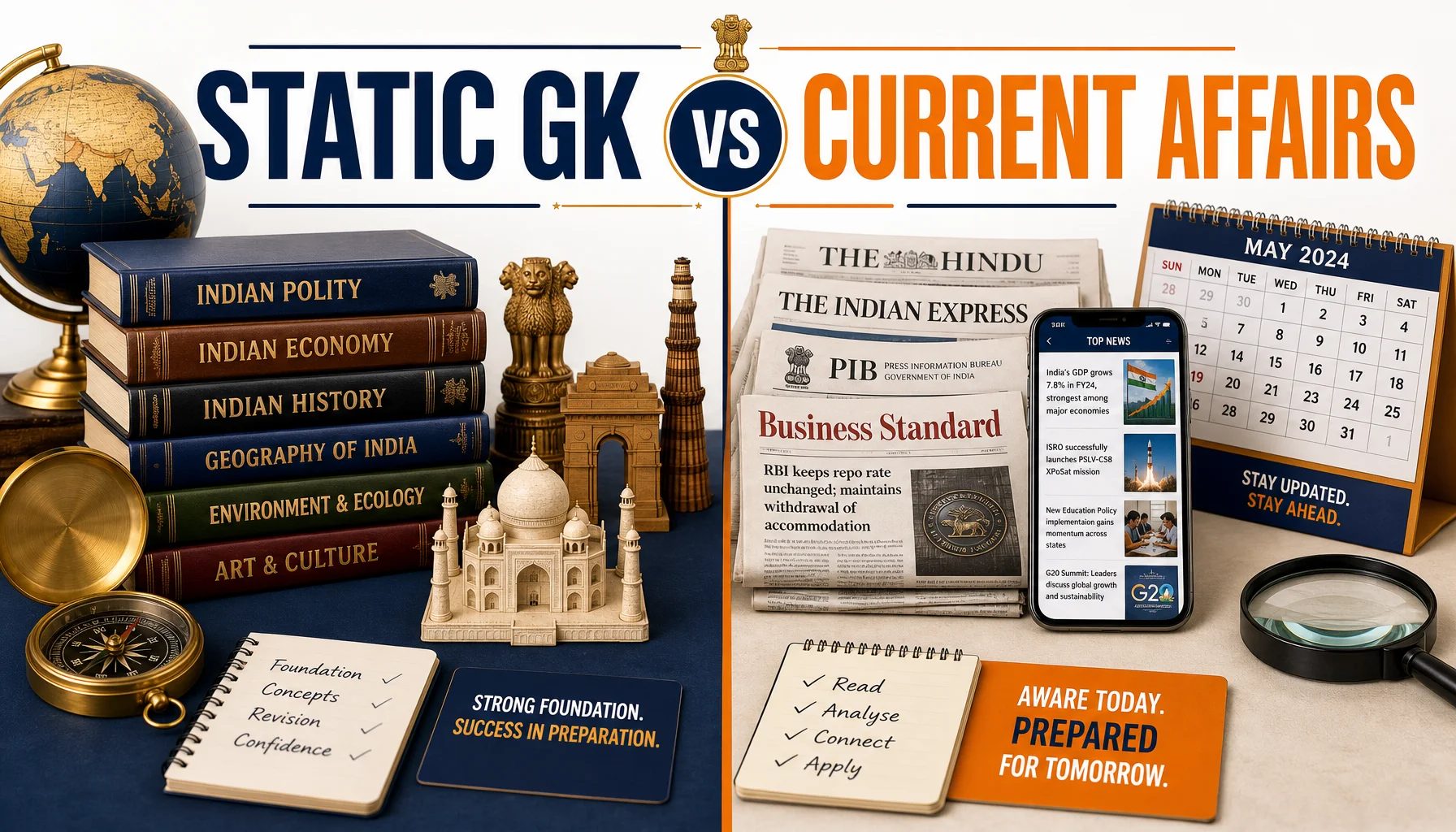
If you’re preparing for competitive or entrance exams, you’ve likely faced a common dilemma: should you focus your energy on static general knowledge or dive into daily current affairs? Both carry significant weight in exams like SSC, banking, railways, UPSC, and various state-level tests. Yet many aspirants waste precious study hours because they never developed a clear strategy for tackling these two distinct categories. This article breaks down the differences, explains how each contributes to your score, and gives you a practical roadmap for prioritizing your preparation intelligently.current affairs
Understanding the Two Pillars of GK
Before deciding what to study first, you need a crystal-clear understanding of what each category actually contains. While they sometimes overlap, static GK and current affairs demand different learning approaches and revision cycles.
What Is Static General Knowledge?
Static general knowledge questions refers to facts and information that rarely change over time. Once you learn them correctly, they remain valid for years. These are the timeless building blocks of any GK section.
- History: Ancient, medieval, and modern events, dynasties, freedom movements.
- Geography: Rivers, mountains, capitals, climate zones, and physical features.
- Polity: The Constitution, fundamental rights, government structure, and important articles.
- Science: Basic physics, chemistry, biology, and important discoveries.
- Static facts: National symbols, dances, festivals, awards, and books-and-authors.
What Are Current Affairs?
Current affairs cover recent events and developments happening in the world around you. This information is dynamic and constantly evolving, which means it requires ongoing attention rather than one-time study.
- National and international news and government schemes.
- Appointments, resignations, and important personalities in the news.
- Sports events, tournaments, and winners.
- Awards, honors, and recognitions.
- Economic updates, summits, agreements, and scientific breakthroughs.
Why the Distinction Matters for Your Strategy
The key difference lies in stability versus volatility. Static GK rewards deep, one-time learning followed by periodic revision. Current affairs, on the other hand, demand consistent daily engagement because new information appears every single day. Treating both the same way is a recipe for frustration.current affairs
Another important factor is the weightage in your specific exam. Banking and insurance exams lean heavily toward current affairs, while SSC and railway exams often balance both. UPSC prelims blends static and current in an interconnected manner. Always analyze previous years’ papers to know the ratio before planning.
Static GK vs Current Affairs: A Direct Comparison
Here’s a quick side-by-side look at how these two categories differ across the factors that affect your preparation:
- Shelf life: Static GK stays relevant for years; current affairs expire within months.
- Study frequency: Static GK needs focused blocks; current affairs need daily touchpoints.
- Revision: Static content is revised occasionally; current affairs need frequent, cumulative revision.
- Source material: Static GK comes from standard books; current affairs come from newspapers, monthly compilations, and apps.
- Return on effort: Static GK offers guaranteed long-term returns; current affairs offer high-scoring but perishable returns.
What Should You Study First?
Now for the central question. The best approach depends on how much time you have before your exam, but there’s a logical framework that works for most aspirants.
Start With Static GK If You Have Time on Your Side
If your exam is several months away, begin with static general knowledge. Here’s why: static GK forms a stable foundation that never expires. Learning it early means you lock in reliable marks without the pressure of constant updates. You can master history, geography, and polity systematically, chapter by chapter, and revisit them at your own pace.Banking Jobs
Additionally, a strong static base makes current affairs easier to understand. For example, if you already know the structure of Parliament, a news item about a new bill will make instant sense. Static knowledge gives context to current events.
Layer Current Affairs on Top, Daily
While you build your static foundation, you should still dedicate 20 to 30 minutes daily to current affairs from the very beginning. Do not postpone this to the last month. Current affairs accumulate, and cramming six months of news in the final weeks is nearly impossible.
Maintain a running note or use a reliable monthly magazine to consolidate what you read. The goal is steady absorption, not last-minute overload.
When Your Exam Is Near
In the final six to eight weeks, shift your emphasis. Prioritize current affairs revision heavily because recent months’ events are the most likely to appear. Simultaneously, run rapid revision cycles of static GK using short notes and practice questions rather than re-reading full textbooks.
A Practical Weekly Balance
Here’s a simple time-allocation model you can adapt to your schedule:
- Early preparation phase: 70% static GK, 30% current affairs.
- Mid preparation phase: 50% static GK, 50% current affairs.
- Final phase before exam: 30% static GK revision, 70% current affairs.
This progressive shift ensures you build a durable base early and peak with fresh, exam-relevant knowledge at the right moment.
Smart Tips to Maximize Retention
- Use active recall: Test yourself with questions instead of passively reading.
- Practice previous year papers: They reveal patterns and frequently repeated topics.
- Make one-page summaries: Condense each static topic for quick final revision.
- Connect current affairs to static topics: This deepens understanding and improves memory.
- Revise current affairs monthly: Cumulative revision prevents forgetting older news.
Conclusion
The debate between static GK and current affairs isn’t about choosing one over the other—it’s about sequencing them wisely. Build your static foundation first for stability and long-term returns, then layer daily current affairs to stay exam-ready. As your exam approaches, flip the emphasis toward fresh current events while quickly revising static facts. With this balanced, phased strategy, you’ll cover both categories thoroughly and walk into your exam confident that no easy mark slips away. Start early, stay consistent, and let your preparation build naturally toward peak performance.

About the Author
muraliprasad
A dedicated content writer specializing in government job notifications and results. With two years of experience covering SSC, UPSC, Banking, Railways, and State PSC examinations, he delivers reliable, well-researched updates tailored for serious government job aspirants.